Canada Resume vs US Resume vs Germany Resume: What's Actually Different
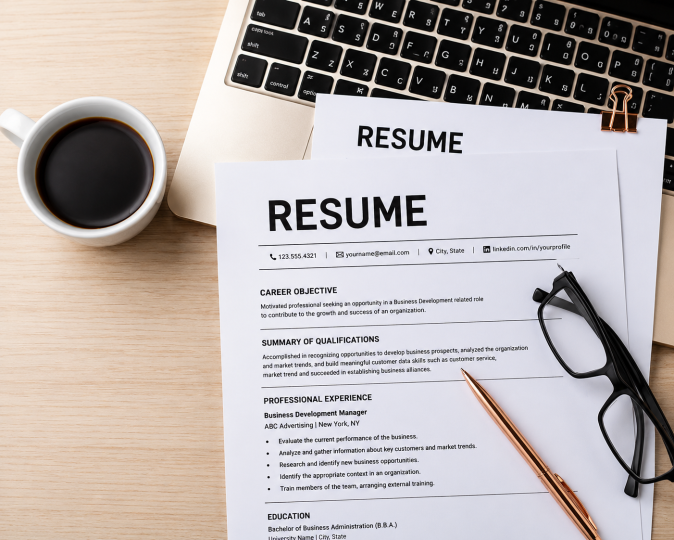
Canada Resume vs US Resume vs Germany Resume: What's Actually Different
If you're applying for jobs in more than one country, using the same resume for all of them is one of the fastest ways to get rejected before anyone even reads your experience. Canada, the US, and Germany all hire skilled professionals, but recruiters in each country expect a different document, formatted a different way, with different information included or left out.
This isn't about small style preferences. Getting it wrong can mean your application gets filtered out by an ATS, or looks unprofessional to a hiring manager, even if you're fully qualified for the role.
Here's a full breakdown of what changes across Canada, the US, and Germany, and why it matters.
Resume Length
Canada and the US: One page is standard for most professionals, especially early to mid-career. Two pages is acceptable once you have 10+ years of experience or a senior title, but you should never pad a resume just to fill space. Recruiters in both countries scan quickly, and a long resume works against you.
Germany: One to two pages is normal, and it's common even for less senior roles. German employers expect a complete picture of your background, not a stripped-down summary. A one-page resume can actually look incomplete to a German recruiter, since the Lebenslauf format leans toward thoroughness over brevity.
Personal Information
This is where the three countries differ the most, and where a lot of applicants get it wrong in both directions.
Canada and the US: Keep it minimal. Name, phone number, email, city and province/state, and a LinkedIn URL is enough. Do not include your date of birth, marital status, nationality, or a photo. In fact, including these can actively hurt you, since Canadian and US employers avoid anything that could be seen as a basis for discrimination, and some companies will discard resumes that include this kind of information for compliance reasons.
Germany: The opposite is true. A German Lebenslauf traditionally includes a personal details section (Persönliche Daten) with your date of birth, place of birth, and nationality. A professional photo is not legally required, but it's still culturally expected in most traditional industries, and leaving it out can look unusual to a German hiring manager. That said, this is shifting. International companies, startups, and firms with US or UK ownership are increasingly moving toward photo-free, anonymized applications. If a job posting is from a clearly international or modern employer and doesn't mention a photo, it's reasonable to leave it out. In a traditional German company, when in doubt, include a professional, well-taken photo.
Format and Structure
Canada and the US: A reverse-chronological resume is the default. Your most recent role goes first, with a short summary or skills section near the top. The layout is usually clean and simple, without tables, columns, or graphics, since most companies use ATS software that struggles to read complex formatting.
Germany: The Lebenslauf follows a tabular format, meaning dates sit in a left-hand column with the details next to them. This structured, table-like layout is a long-standing convention and is expected even in ATS-driven applications at larger companies. Sections are also typically presented in a specific order: personal details, then work experience, then education, then skills and languages.
Dates and Language
Canada and the US: Dates are written in Month/Year format (e.g., March 2023), and resumes are written in English (or French in parts of Canada, particularly Quebec).
Germany: Dates follow the European format, DD.MM.YYYY, and if the job posting is in German, your Lebenslauf should be in German too. If you're applying to an international company or a role that's explicitly posted in English, an English CV is fine, but it's worth having a German version ready, since many companies will expect one eventually in the process.
Cover Letters and Supporting Documents
Canada and the US: A cover letter is often optional unless specifically requested, and when it's included, it's usually short (under one page) and focused on why you're a fit for the specific role.
Germany: A complete application (Bewerbung) typically includes a Lebenslauf, a cover letter (Anschreiben), and copies of previous employer reference letters (Arbeitszeugnisse). These reference letters are a distinct part of German hiring culture and use a kind of coded, formal language to describe past performance. If you're applying from abroad and don't have these, it's worth explaining that in your cover letter rather than leaving the gap unaddressed.
Tone and Content Style
Canada and the US: Resumes are achievement-focused. Bullet points should lead with strong action verbs and include measurable results wherever possible (e.g., "Reduced processing time by 30%" rather than "Responsible for processing tasks"). Self-promotion, within reason, is expected and rewarded.
Germany: The Lebenslauf is more factual and less promotional. German employers value precision, structure, and completeness over persuasive language. That doesn't mean you skip achievements, but the tone stays formal and understated compared to what works in a Canadian or US resume.
Why This Matters More Than It Seems
A resume isn't just a summary of your background. It's also a signal to the employer that you understand how hiring works in their market. Submitting a US-style one-pager to a traditional German company, or including a photo and birth date on a resume for a Canadian employer, tells the hiring manager you haven't done your homework, even if your qualifications are strong.
This is especially important if you're applying to multiple countries at once. It's tempting to use one master resume everywhere to save time, but that shortcut usually costs you interviews. The fix isn't necessarily writing three completely different resumes from scratch. It's adapting the format, the details you include, and the tone to match what each market expects, while keeping your actual experience and achievements consistent underneath.
Getting This Right
If you're applying internationally and aren't sure whether your resume is actually built for the country you're targeting, it's worth having someone review it who knows these conventions well. Small formatting choices, like whether to include a photo or how many pages is appropriate, can be the difference between getting past the first screen or getting filtered out immediately.
Our Resume Support Package is built specifically around this kind of country-by-country optimization, so your resume is formatted the right way for wherever you're applying. If you're not sure where to start, get in touch and we can walk through what your resume needs for your target market.
Other Blogs

How Long Does a Job Search Really Take in Canada Right Now?
.jpg)
Starting Strong: How TNSI Is Transforming the International Job Application Experience
Work Permits and Job Offers: What Comes First?
What Actually Happens When Your Resume Hits an ATS